Showing posts with label Dove Field. Show all posts

Tuesday, August 21, 2012

The Poor Boy's Dove Field


It’s been a while since my last post, and it might take days to catch up, but here is the quick synopsis of the plans for this year’s dove field.  I believe I gave some advice that if you don’t have the cash to spend planting and working the perfect field, there are options.  When I was told in April that I would be laid off this summer, those options were my only hope.  So this year, it’s the poor boy’s dove field.

I had tilled the field during the turkey season in hopes of planting sunflower and was trying to figure how much herbicide to put out, when I learned of my bosses’ plans.  When you have to cut back, the expensive field is the easy thing to do.  So we just let it grow, and I figured I’d mow a few strips a couple of times in the summer and just see what happens.

So I did.  Nothing fancy, and there were plenty of grasses and weeds dropping seed.  The first time I looked at the field was late July and we found an early covey of quail at the edge.  A strip was mowed, and we would see what may come.  And to my delight, the news from Johnny that he found dove feeding in the field this past weekend.

We shall see.  Hopefully the open mowed area will draw a few birds in.  If not, it seems the quail will be there for the winter hunts.  Regardless, I know where I’m spending opening day now.

Monday, September 26, 2011

Back in the Field

It has been well over a month since my last post and I could make some excuses. Busy at work, few doves in the field, procrastination, etc. etc.  With the field full of weeds and the drought keeping us from burning, the field did not look that attractive to the doves that we hoped for.  Enough of the excuses, the season is in for crying out loud. 
Labor Day Weekend - There were birds flying over, so we set out open day weekend to have some fun, hang out and shoot the field.  To sum it up, we saw plenty of birds, but all flying high or around the field, and most in the same direction.  We checked the craw of the few doves killed and found them full of sunflowers, something not in our field.  So, a field close by was the primary feeding field and ours was simply a place for the occasional seed.
But all was not lost, we did have some fun and I got to:
Watch my daughter take her first shot with a shot gun

Watch my friend Jonny and his son claim one bird they both shot at

Eat well

Watch Johnny's dog work

Spend hours sitting in the field with my daughter

Shoot at a few birds


Here are some pictures, I’ll write more about the three hunts I took in Georgia’s first season in upcoming posts.
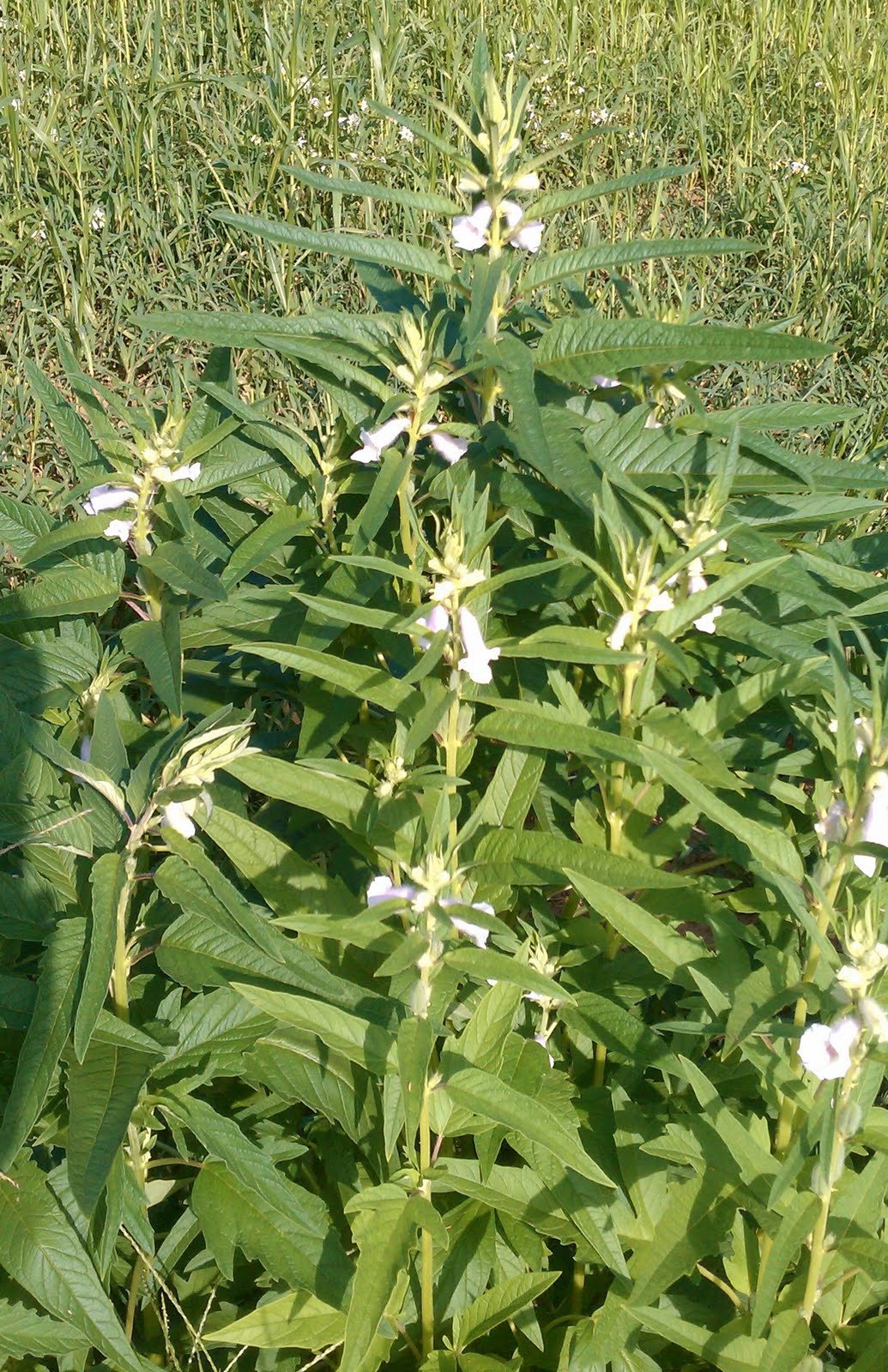
Sesame still in bloom

A hand full of Sesame seed


The Dove Field before the first shoot


My daughter getting ready for her first shotgun shot.


A happy first shot

Finally, Hunting!
(Remember to change the date on my camera next time)


Monday, August 1, 2011

Dove Field Update

Finally, after waiting for the dove field to grow, it’s about time to start mowing, burning and preparing for a hunt.  Dove season is only one month away.  We took a look at the field last week to plan what we would do for mowing.  The Millet was a little stressed and suffering from a drought, over planting and weeds.  But there is still plenty of seed production, so not bad.  The Proso Millet is coming along, not shooting up seed heads yet, but definitely growing.
Sesame in Bloom


In the upper part of the field, the sesame was doing the best.  This area was full of healthy plants and lots of flowers with more flower buds ready to open.  It’s a little over crowded, but producing a lot.  The Sesame in the lower half of the field is struggling, though.  Deer browsing, weeds, and drought have caused this stand to be low with few flowers.  It’s funny how the lower portion of the field suffered more from the drought than the upper portion. 
After viewing the field, I started with the plans.  There’s a lot of information on the internet about mowing, burning and preparing the field for a hunt.  Doves like a field with easy access to seed.  Open ground with lots of food.  The Sesame requires no mowing or burning, but we will need to thin the stands out a little to provide an open area.
For the Brown Top Millet, which is already producing seed, I am hoping we can burn it.  This will surely provide open ground with seeds.  Plan B will be to mow it close to the ground if we can’t get a burn permit.

More Sesame

By the time the Prose Millet is ready, the first dove season will be here, and I don’t want to spend too much time in the field, except to hunt.  So we will mow this seed and maybe disc some bare areas in the field.

That’s the plan anyway, but I’ve learned that the field doesn’t always go as planned.  We’ll be up to the field this weekend to start the work on preparing the field for doves.
Millet Going to Seed


Sunday, July 17, 2011

The Economics of Dove Hunting

Years ago, my father and uncle would walk out their front door, head down the creek and hunt ducks, quail or some other game.  Before then, people depended on fish and game to help feed the family.  Even today, I see folks with cane poles lined up at the river to catch a meal, and I hear about families depending on squirrel hunts to provide food.  My father actually justified the purchase of a nice Browning shotgun by telling my mother that he would be putting meat on the table.
But times have changed since then, and fishing and hunting is a sport rather than a necessity.  We no longer kill game, rather we “harvest.”  We spare no expense in this recreation, spending money on top dollar guns, clothes, gear and anything else we think we need or would help us in the field.  I recently took a look at what I’ve spent planting the dove field and getting it ready to hunt, and I wonder what the costs per dove will actually be.
When I was in college, I took a recreation economics class, and I remember the professor saying something about including a person’s time in the models to determine how much a trip is worth to the person.  So, trying to remember the concepts the professor taught, I set out to estimate the value of this dove field to me.
Let’s see, I’m lucky and there isn’t any cost for the land, but there is the cost of fertilizer
and seed, and weed kill;
 oh I shouldn’t forget the cost of the soil test.
There’s the time I went to test the soil, I think it was 1 hour, and the time plowing, and
time planting.
Let’s see, time in the field times my hourly pay rate;
carry the 1.
Oh, what about travel costs?  Number of miles times the government mileage rate;
cost of the hunting license, shells, water ….;
total the factors.
How many dove will I take?  How often will I hunt? OK, maybe I’ll hunt four times in the first season, three in the second; 
Maybe I’ll average 8 birds a hunt, hopefully more.  56 birds divide by the total.
That comes out to about $583.60 per pound.  Wow, I could buy a lot of Kobe Beef with $583. 


Of course, you are probably not paying this much to hunt nor spending as much time to prepare for a hunt.  But if you spend 3 hours in the field to take your limit of 15 doves, you’re not only a good shot, but you’re also valuing the hunt at least from $25 to $50 per pound.  (Sorry Dad, your gun is not going to pay for itself with meat on the table).
That is a hefty price, but it’s not the point.  The point is that I’ve enjoyed working on this field, and I can’t wait for this fall season.  There’s time spent with family and friends, trying to figure out what I need to do to get dove’s to fly in the field.  I’m not sure we will go as far as to call it “harvesting;” I still call it dove hunting, and it’s worth it!

Friday, July 8, 2011

Rain is a Good Thing

I know floods have devastated parts of the country and the folks affected by these floods don’t want to see any rain, but in Georgia a drought over the past few months has ruined lawns, crops and the Dove Field. Finally, the rain has started to fall here, but when I go to the radar on the internet, it seems as if there is a black hole around Johnny’s land. Storms approach only to break apart just before they reach the Dove Field I’ve planted. It seems there is a black hole above the field sucking all the moisture out of any cloud that could provide the much needed water.
Over this past weekend, my daughter Sydnie and I took the trip to Johnny’s land just to see how the field was progressing, as well as to formulate a plan for replanting the drought stricken crop. I’ll admit that as we drove up to the field my thoughts were centered on where I might be able to purchase more millet seed over the 4th of July weekend. I fully expected that we would need to replant most of the field. The fun of imagining multitudes of doves swarming in to waiting guns had vanished from my thoughts, and the concerns of growing a crop in a drought weighed heavy upon my mind.
First view, things are progressing nicely

So we arrived, and after some minor equipment repairs to Johnny’s truck and catching up with him and his son George, we checked the rain gage. Two inches; thinks were looking up. But had the field sustained itself enough to recover? Sydnie and I hopped on a four-wheeler and headed to the field for the answer. Much to my delight, things were progressing nicely.

Sydnie standing next to a thick patch of Millet


You know I’m not a farmer and the field is by no means perfect. But the Millet we planted three weeks ago is coming up, the Sesame is flowering, and the Brown Top Millet is starting to produce seed heads. There are a lot of weeds, but for me, that’s okay. Most of the weeds are grass, which will produce seed for the doves as well as the millet and the sesame. The good news is that I didn’t have to find a place to purchase more seed.
Rain is a good thing and has made everyone happy.


The best news is that the rain has brought my thoughts back to what the field will be. There’s a song by Luke Bryan called Rain is a Good Thing because rain makes corn, and corn makes whiskey. For me, rain is a good thing because rain makes Millet, and Millet feeds doves, and friends and family will pile in the field for a good southern dove shoot this fall.